
Arabica coffee: The rich history of the world’s favorite bean
Arabica coffee: The rich history of the world’s favorite bean—and why Americans can’t get enough of it
 Walk into almost any café, office breakroom, or kitchen in America and there’s a very good chance the coffee being brewed started life as Coffea arabica—better known as Arabica. It’s the bean most people associate with smooth flavor, nuanced aromas, and the “specialty coffee” experience. But Arabica didn’t become America’s go-to overnight. Its story stretches from ancient forests to global trade routes, from old-world port cities to modern bean-to-cup machines—finally landing right where we want it: in a fresh cup, delivered conveniently to workplaces across Florida and beyond.
In this guide, we’ll explore the history of Arabica coffee, how it spread across the world, why it rose to the top with American consumers, and how Aroma Coffee Services helps businesses keep premium Arabica-focused coffee flowing through reliable office coffee delivery—along with all the “complete breakroom” essentials that keep teams happy and productive.
What is Arabica coffee—and why does it taste “better” to so many people?
Arabica is one of the most widely valued coffee species on Earth, often favored for its balanced sweetness, pleasant acidity, and wide range of flavor notes—think chocolate, citrus, berries, florals, and caramel depending on origin and roast. Compared to Robusta (another major coffee species), Arabica is generally considered more delicate and complex, which is one reason it became the star of the specialty coffee world.
Arabica’s popularity isn’t just about taste. It also ties into how coffee is sourced, roasted, and brewed today. When consumers started caring more about single-origin, terroir, ethical sourcing, and roasting craft, Arabica was the natural “main character” of that movement—because it tends to showcase those subtleties more clearly.
The origin story: Ethiopia, Yemen, and the birth of cultivated Arabica
Arabica is native to Ethiopia, where the deepest genetic diversity of the species is found. Historians widely believe coffee seeds moved from Ethiopia into Yemen, where Arabica became a cultivated crop—setting the stage for coffee’s global spread.
From there, coffee’s reputation grew fast. Coffeehouses became social hubs. Coffee became a traded good. And the port city of Mocha (in Yemen) became so synonymous with coffee that “mocha” remains a familiar word in modern coffee culture—even if today it often implies chocolate and espresso rather than geography.
How Arabica traveled: trade routes, empires, and coffee’s global leap
Once Arabica was established as a cultivated crop in Yemen, it didn’t stay put. Through trade and colonial expansion, coffee plants and seeds made their way into new growing regions—parts of Asia, the Indian Ocean islands, and eventually the Americas. Over time, Arabica became the backbone of coffee economies in many countries, powering both local agriculture and international commerce.
That long journey also created the early foundations of what we now call “coffee variety” culture—Typica and Bourbon lines, regional selections, and later, modern breeding efforts. The key point for today’s coffee drinker: the Arabica you enjoy in a breakroom in Tampa or a conference room in Sarasota has roots that trace back to centuries of cultivation and selection.
Arabica in America: from commodity coffee to specialty obsession
America’s relationship with coffee has always been big—but it hasn’t always been picky. For much of the 20th century, the mainstream standard was convenience: percolators, tins, and bold, consistent flavor designed for mass appeal. Over time, however, consumer expectations changed—and that’s where Arabica surged in popularity.
The specialty shift: why Americans started demanding better beans
Several trends helped Arabica rise from “just coffee” to “the coffee people ask for”:
- Café culture expansion: As café-style drinks became everyday habits, consumers began noticing the difference between basic coffee and a smoother, more aromatic cup.
- Single-origin curiosity: People started asking where coffee came from—Ethiopia, Colombia, Guatemala, Costa Rica—and Arabica is often the star of these origin stories.
- Better brewing at home and at work: The boom in single-cup systems, bean-to-cup brewers, and improved office coffee setups made it easier to brew café-quality coffee anywhere.
- Flavor-driven preferences: Arabica’s perceived sweetness and complexity matched what modern consumers wanted—especially as palates shifted toward quality and variety.
In short: Americans didn’t just start drinking more coffee—they started caring more about what they were drinking.
Why Arabica keeps winning hearts in the U.S.
Arabica’s growing popularity with American consumers can be summed up in one phrase: experience matters. People want coffee that tastes good black, works beautifully in espresso drinks, and feels like a small daily upgrade.
Here are a few reasons Arabica continues to dominate consumer preference:
- Smoother flavor profile: Many Arabica coffees feel less harsh and more layered, especially in medium roasts and single-origin styles.
- Perfect for espresso culture: Arabica-forward blends are common in espresso programs because they can deliver sweetness, crema, and aroma without overwhelming bitterness.
- More variety to explore: Different origins, processing methods, and roast levels give Arabica fans endless “new favorite” possibilities.
- Better breakroom satisfaction: In offices, one “pretty good” coffee option usually isn’t enough anymore. Teams want choices—light, dark, decaf, espresso-style, flavored—often built on an Arabica foundation.
Arabica coffee delivery for offices: where Aroma Coffee Services comes in
If Arabica is the star, delivery is the stage crew—because consistently great coffee requires consistent supply, the right equipment, and the right support.
Aroma Coffee Services provides coffee service for offices, apartments, and dealerships across Central and Southwest Florida, offering coffee, tea, water systems, snacks, and janitorial supplies as part of a complete breakroom solution.
Instead of someone on your team making last-minute “coffee runs” (and returning with three random creamer flavors and exactly zero stir sticks), Aroma helps businesses stay stocked with the products they actually use—so your office coffee station stays reliable, organized, and ready for Monday morning.
Want to explore the coffee lineup? A great starting point is Aroma’s guide to Gourmet Coffee Brands Delivered, which highlights many of the premium brands businesses recognize and request.
Coffee brands sold by Aroma Coffee Services that are known for Arabica coffee
Below are several brands available through Aroma Coffee Services that are widely associated with Arabica-based coffees, along with a couple of Aroma-specific examples that explicitly call out Arabica sourcing.
Arabica-forward brands featured by Aroma Coffee Services
- Starbucks – A globally recognized brand included in Aroma’s gourmet lineup. (Example styles mentioned by Aroma include Pike Place Roast, Sumatra, and Veranda Blend.)
- Illy – Aroma notes Illy’s “nine-blend Arabica coffee,” highlighting the brand’s Arabica identity.
- Lavazza – A staple espresso brand included in Aroma’s gourmet offerings and widely known for espresso blends and café-style coffee programs.
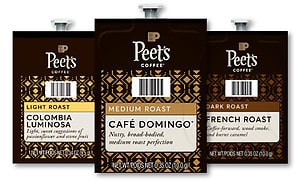
- Peet’s Coffee – Featured by Aroma as a specialty coffee pioneer with bold blends commonly built on high-quality Arabica sourcing.
- Green Mountain Coffee Roasters – Included in Aroma’s gourmet list and commonly associated with Arabica-based K-Cup and single-serve programs.
- New England Coffee – Aroma specifically states they craft premium roasts using 100% Arabica beans.
Aroma-local favorites with explicit Arabica messaging
- Java Nick’s (exclusive through Aroma) – Aroma states Java Nick’s uses a select four-bean blend of Central and South American, hand-picked Arabica beans, with availability in fraction packs, pods, and whole bean options for different office brewer styles.
If you want to browse Java Nick’s options directly through Aroma, you can start here: Java Nick’s coffee at Aroma.
External brand references (3 total): If you’d like to reference brand background and Arabica heritage outside of Aroma’s site, you can visit Starbucks, Illy, and World Coffee Research’s overview on the history of Arabica.
Aroma Coffee Services: a quick, succinct list of what they deliver
Aroma Coffee Services positions itself as a “complete breakroom” partner, with core categories that go well beyond coffee alone:
- Coffee & Tea (including gourmet coffee brands and related beverage options) :contentReference[oaicite:13]{index=13}
- Coffee brewing equipment (traditional, single-cup, and bean-to-cup systems) :contentReference[oaicite:14]{index=14}
- Paper, janitorial, and essential cleaning products :contentReference[oaicite:15]{index=15}
- Water systems (including filtration and office water solutions) :contentReference[oaicite:16]{index=16}
- Food & beverage breakroom items (snacks and more) :contentReference[oaicite:17]{index=17}
- Green products (sustainable/eco-minded options) :contentReference[oaicite:18]{index=18}
Why Arabica + office delivery is a productivity upgrade (not just a perk)
In modern workplaces, coffee isn’t merely a “nice-to-have.” It supports routines, meeting culture, and the small moments that keep teams connected—especially in offices with hybrid schedules where in-person time needs to feel worth it.
When a business chooses Arabica-forward coffee options, it’s making a subtle but meaningful statement: “We care about quality.” Pair that with reliable delivery and the right equipment, and coffee stops being a recurring headache and becomes an easy win.
Aroma Coffee Services emphasizes this convenience and variety—helping offices offer multiple roast styles, formats (whole bean, ground, pods), and complementary breakroom supplies so teams aren’t constantly running out of the basics.
Bring Arabica history to life—one delivered cup at a time
Arabica coffee’s journey—from Ethiopian forests to Yemeni cultivation, to global trade routes, to America’s modern specialty boom—is a story of culture, craft, and changing expectations. And today, that story continues every time a fresh cup is brewed in an office breakroom.
If your team is ready to upgrade the daily coffee experience (and keep it stocked without the stress), explore Aroma’s gourmet coffee brand options or start the conversation through their contact page to request new service.
Because the best coffee history lesson is the one you can drink—preferably before your first meeting.
Check Out More Categories
Alterra Coffee
Bean to Cups Systems
Can Liners for Offices
Cappuccino For Offices
Carbon Filtration Systems
Caribou Coffee
Coffee Pods
Cold Brew Coffee
Cold Drink Mixes For Offices
Condiments For Office Breakrooms
Cups & Lids for Office Breakrooms
Douwe Egberts
Flavia Coffee
Green Mountain Coffee
Hot Drinks & Soups For Offices
Java Nicks
Juices For Office Breakrooms
K-Cup Coffees
Kahwa Coffee
Katie's Donut Shoppe Coffee